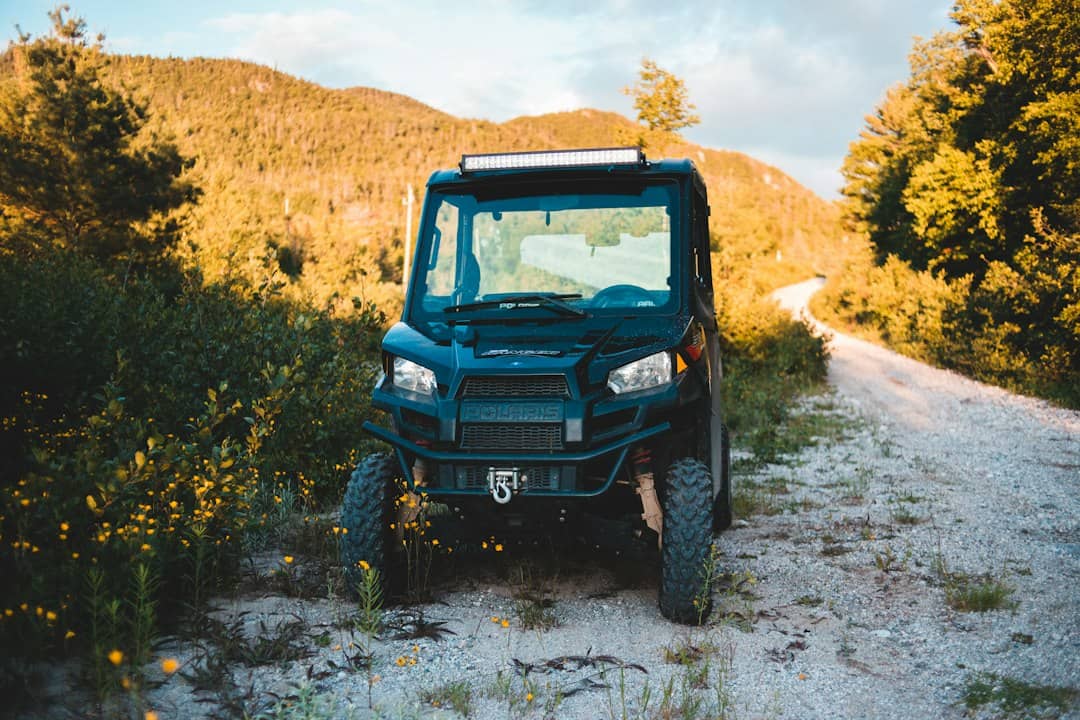
What to look for when buying a used Polaris Ranger comes down to three things: the recall record, the mud history and the paperwork. A Ranger that looks clean on Marketplace can still hide an open fire recall, a flooded airbox, a heat-glazed belt and worn wheel bearings. Polaris's 2024 Ranger XP 1000 owner's manual calls frequent mud, water or sand immersion severe use, serviced at 50% of the stated interval [SYNTHESIS].
Which Polaris Ranger years should you buy used, and which should you skip?
Buy the newest Ranger generation your budget reaches, and skip any recalled Ranger whose repair you cannot confirm. The public record does not condemn a whole model year. It does show CPSC recalls on every Ranger family in the table from 2014 to 2026, most of them for fire hazards. Each CPSC remedy is a free inspection or repair, so the used-buyer question is whether the work was done.
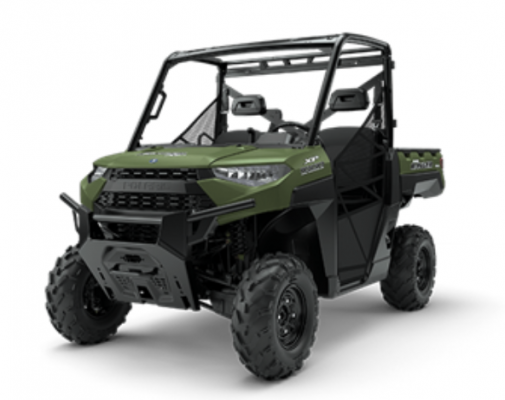
Image: U.S. Consumer Product Safety Commission, recall notice for 2018 to 2020 Ranger XP 1000.
| Model years | Ranger family | What changed | CPSC recalls (details below) | Buy it if |
|---|---|---|---|---|
| 2013 to 2019 | Ranger XP 900, Crew 900 | All-new chassis and a ProStar 900 rated at 60 hp for 2013 (ATV.com); 875cc and 68 hp by 2019 (UTV Driver) | 16-264 (fire), 17-132 (fire), 18-737 (seat belt) | A 2014 to 2017 has every listed repair on record |
| 2015 to 2020 | Ranger 570, Crew 570 | The lower-priced Ranger 570 family; 2015 and 2016 models sold new for $10,000 to $12,500 | 16-755 (fire), 20-735 (seat belts) | The overheating and seat belt repairs are on record |
| 2017 | Ranger XP 1000, Crew XP 1000 | Debut of the 1000cc, 80 hp ProStar engine (ATV.com) | 18-737 (seat belt) | The seat belt bracket repair is on record |
| 2018 to 2020 | Ranger XP 1000, Crew XP 1000 | Completely redesigned for 2018 with a Ranger-first one-piece frame (Dirt Wheels) | 20-733 (fire), 20-734 (fire), 20-758 (crash), 20-765 (crash), 20-735 (seat belts), 21-724 (crash) | Every listed recall is closed and all-wheel drive engages |
| 2020 to 2024 | Ranger 1000, Crew 1000 | Replaced the XP 900 for 2020 with a 61 hp single-overhead-cam ProStar 1000 (ATV.com) | 21-732 (fire), 21-724 (crash), 20-735 (seat belts), 23-258 (fire), 23-796 (seat belt), 25-702 (seat belt) | Every listed recall is closed |
| 2021 to 2024 | Ranger XP 1000, Crew XP 1000 | Front drive rebuilt 30 percent stronger and the frame around it 15 percent stronger for 2021, 82 hp (Dirt Wheels, UTV Driver) | 21-724 (crash), 23-258 (fire), 23-796 (seat belt), 24-711 (fire, crash), 25-284 (seat belt), 25-702 (seat belt) | Every listed recall is closed; NorthStar cabs carry extra notices |
| 2023 to 2024 | Ranger XP Kinetic (electric) | Polaris's electric Ranger | 25-024 (fire, crash), 25-343 (fire), 25-702 (seat belt) | Every listed repair is on record |
| 2025 to 2026 | Full-size Ranger 1000 and XP 1000 | Restyled XP 1000 front end, 29-inch XP 1000 tires, and a Gen 2 transmission that cuts shifting effort up to 50% (Polaris) | 26-054 (fire), 25-284 (seat belt) | Every listed recall is closed and factory warranty time remains |
The recalls behind the table, one line each:
- 16-264: 2014 Ranger XP 900: the heat shield can fall off, a fire and burn hazard, about 42,500 units.
- 16-755: 2015 to 2016 Ranger 570 and Crew 570: can overheat under heavy engine loading and catch fire, about 43,000 units.
- 17-132: 2015 Ranger XP 900: the same heat shield hazard, about 51,000 units.
- 18-737: 2016 to 2017 Ranger XP 900 and 2017 Ranger XP 1000: the center seat belt bracket can separate from the frame, about 10,900 units.
- 20-733: 2018 to 2020 Ranger XP 1000: the clutch belt can break and damage the secondary clutch and fuel line, a fire hazard, about 80,000 units.
- 20-734: 2019 to 2020 Ranger XP 1000: a misrouted fuel line, a fire hazard, about 7,000 units.
- 20-735: 2020 Ranger 570, 1000 and XP 1000: the seat belts can fail.
- 20-758: 2019 to 2020 Ranger XP 1000: throttle software can fail to return to idle after a stall and restart, a crash hazard, about 26,730 units.
- 20-765: 2020 Ranger XP 1000: a clutch part can disable engine braking, a crash hazard.
- 21-724: 2020 to 2021 Ranger 1000 and XP 1000: the throttle pedal can stick, a crash hazard.
- 21-732: 2020 to 2021 Ranger 1000: the drive belt can break and damage the clutch cover and fuel line, a fire hazard, about 41,500 Polaris, Gravely and Bobcat units.
- 23-258: Certain 2021 to 2023 Ranger 1000 and XP 1000 VINs: fuel can leak at the pump outlet near a hot surface, a fire hazard.
- 23-796: Certain 2023 Ranger 1000 and XP 1000 VINs: a seat belt bracket weld, about 280 units.
- 24-711: Certain 2023 Ranger XP 1000 NorthStar units: a brake line, a fire and crash hazard.
- 25-024: 2023 to 2024 Ranger XP Kinetic: loose high-voltage cables at the motor controller, a fire and crash hazard.
- 25-284: 2023 to 2025 Ranger XP 1000 NorthStar: the seat belt fasteners.
- 25-343: Ranger XP Kinetic: water can enter the charging harness through a cracked filter, a fire hazard.
- 25-702: Certain 2024 Ranger 1000, XP 1000 and XP Kinetic VINs: a seat belt anchor weld.
- 26-054: Certain 2025 to 2026 Ranger XP 1000 NorthStar VINs: the alternator cable can short against the battery post, a fire hazard, about 5,130 units.
Each recall number in the list links to its CPSC notice. Together they are the CPSC recall notices this publication found for these Ranger families as of October 31, 2026. It leaves out the Ranger XD 1500. Many notices cover only certain VINs, so a VIN lookup is the complete check. Polaris runs that lookup on its off-road recall lookup page.
The VIN sits in different places on different Rangers. For 2023 to 2026 XP 1000 NorthStar models, CPSC notices 25-284 and 26-054 place it on the left rear frame under the cargo box. Recall 20-733 shows the spot on the 2018 to 2020 XP 1000.
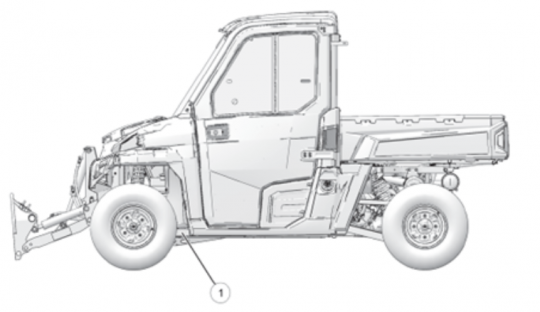
Image: U.S. Consumer Product Safety Commission, VIN location shown in recall 20-733 for 2018 to 2020 Ranger XP 1000.
Two year ranges deserve extra care. The 2014 and 2015 Ranger XP 900 were both recalled because the heat shield can fall off, posing fire and burn hazards. In 2018 the CPSC announced a $27.25 million civil penalty against Polaris [SYNTHESIS]. It covered charges that Polaris failed to report RZR and Ranger defects promptly, including the 2015 Ranger XP 900 heat shield. The 2020 Ranger XP 1000 falls under six notices: two for fire, three for crash hazards and one for seat belts. Each is a free repair, but a 2020 XP 1000 needs every one confirmed by VIN. A 2014 or 2015 XP 900 with no repair record is the clearest pass on the used market.
Our pick: Hattiesburg Cycles
Ride South Mississippi names Hattiesburg Cycles as its pick and has a commercial relationship with the dealership.
Visit Hattiesburg Cycles →What are the common problems on a used Polaris Ranger by generation?
The documented Ranger problems cluster around fire risk, throttle faults and seat belt mounts. The fire risk comes from heat, broken belts, fuel lines and wiring. The XP 900 recalls involve a heat shield that can detach. The Ranger 570 recall involves overheating under heavy load, which the CPSC links to slow-speed use and high outdoor temperatures. The Kinetic recalls involve high-voltage wiring.
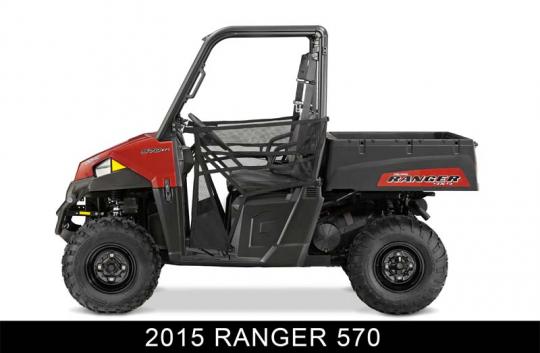
Image: U.S. Consumer Product Safety Commission, 2016 Ranger 570 recall notice.
The belt recalls on 2018 to 2021 machines involve a broken belt damaging the clutch and fuel line. The throttle recalls on 2019 to 2021 machines involve throttle software and a sticking pedal. Seat belt bracket, anchor and fastener recalls run from 2016 to 2025. Fuel and electrical fire notices reach the 2025 and 2026 XP 1000 NorthStar.
Those are recall facts, not failure rates. No source this guide used publishes a failure rate by model year, and owner-forum complaints are not counted here as evidence.
Belt wear is the problem a buyer can see. The 2024 Ranger XP 1000 owner's manual tells drivers to use low gear under 10 mph and in rough terrain. It says a belt with thin spots or burn marks should be replaced. A Ranger crawled through mud holes in high range shows that wear first. A replacement belt runs roughly $200 to $400 with labor, per this publication's drive belt guide.
The front drive is the other generation marker. For 2021, Polaris rebuilt the XP 1000 front drive with metal sprags in the differential. Dirt Wheels reported it at 30 percent stronger, with the frame around the differential 15 percent stronger [SYNTHESIS]. Dirt Wheels said Polaris made the 2021 changes working with input from actual owners. On a 2018 to 2020 XP 1000, front-drive engagement is a test worth five minutes.
The 2025 refresh changed how the Ranger drives more than what it is built on. Polaris's April 2024 release lists a Gen 2 transmission that cuts shifting effort by up to 50% [SYNTHESIS]. Chris Judson, Polaris Vice President and General Manager of Off Road Utility, framed the 2025 changes in that release. "We constantly use our customers' feedback to drive improvements that truly matter to them and make the best-selling side-by-side even better," he said. That is the maker's claim, and the 2025 machines have had the least time to build a used-market record.
What should you look for when a used Ranger has lived in Gulf South mud?
Look for mud damage from the bottom up. Water reaches the airbox and engine, mud packs into the clutch housing, grit works into wheel bearings and CV boots, and frame hardware rusts. Polaris tells owners never to operate in fast-flowing water or water deeper than the floor level. A mud-park Ranger wearing a snorkel was likely set up to cross that line.
Polaris is blunt about what happens next. "If your vehicle becomes immersed, major engine damage can result if the machine is not thoroughly inspected," the 2024 Ranger XP 1000 owner's manual warns. The manual says to take an immersed Ranger in for service before starting the engine. It also says the air filter must be replaced if water is present in the airbox.
Severe use changes the maintenance math. Polaris lists frequent immersion in mud, water or sand as severe use, serviced at half the stated interval. Its inspection of wheel bearings, tie rods, suspension bushings and ball joints falls at 100 hours or yearly. On a mud-run Ranger, that inspection should show up about every 50 hours.
Ask how the Ranger was cleaned after rides, too. The manual warns against aiming high-pressure water at wheel bearings and says to grease all zerk fittings right after washing. Red clay packs into the same places a pressure washer reaches. The Mississippi mud parks guide covers what that terrain asks of a machine.
Our pick: Hattiesburg Cycles
Ride South Mississippi names Hattiesburg Cycles as its pick and has a commercial relationship with the dealership.
Visit Hattiesburg Cycles →The Ride South Mississippi Red Clay Ranger Check
The Ride South Mississippi Red Clay Ranger Check is five Ranger-specific checks, ordered by what being wrong costs. Run them before talking price, and walk away if the seller refuses any of them. The full 42-point walk-around lives in the used UTV inspection checklist, and these five sit on top of it.
- The VIN check. Run the VIN through Polaris's recall lookup. On any recalled year, ask for the repair record. An open fire recall is the most expensive thing to miss, and each CPSC remedy is a free inspection or repair.
- The immersion check. Open the airbox and look for silt, a water line, or a rinsed filter. Pull the dipstick, because milky oil means water reached the engine. Ask outright whether the Ranger was ever submerged.
- The corner check. Jack each corner and rock the wheel top to bottom. Play at more than one corner points at the whole machine. Look for torn CV boots, and on a 2018 to 2020 XP 1000, confirm all-wheel drive engages.
- The PVT check. The 2024 Ranger XP 1000 manual puts a red drain plug on the outer clutch cover. If the seller allows, pull it and see what drains. Then look for belt thin spots or burn marks.
- The paper check. Match the hour meter to the service records and the wear. A mud-run Ranger should show bearing and ball joint inspections about every 50 hours. Settle title status under the rules in the Mississippi side-by-side title guide.
A Ranger that fails check one or two is a walk-away. Checks three to five usually become a price conversation.
How many hours is too many on a used Ranger?
No hour count disqualifies a Ranger on its own. This publication's hours guide treats under a few hundred hours as low and a few hundred to about 1,000 as average for a side-by-side. It treats 1,500 to 2,000 hours and beyond as high. On a mud-run Ranger, the service record matters more than the meter.
Polaris's severe-use rule gives the record a test. Count the bearing and ball joint inspections against the hours. A 1,200-hour Ranger with an inspection every 50 hours tells a better story than a 400-hour Ranger with none. Trust the wear over the number when the two disagree.
Our pick: Hattiesburg Cycles
Ride South Mississippi names Hattiesburg Cycles as its pick and has a commercial relationship with the dealership.
Visit Hattiesburg Cycles →Is buying a used Ranger from a dealer better than a private sale?
Neither route is better by default, because a Ranger's history travels by VIN rather than by seller. What changes is who does the checking. A private sale leaves every check in this guide to the buyer. The CPSC notices say Polaris contacts registered owners directly about recalls, so a second owner should get the Ranger registered in their own name.
Factory warranty can follow the machine. Polaris's owner's manual for the 2023 Ranger XP Kinetic covers a one-year limited warranty. It says the warranty "is transferable to another owner during the warranty period through an authorized dealer." The same manual says a transfer does not extend the original term. The Ranger's one-year term is set against the RZR, General, Can-Am and CFMoto terms in does a used side-by-side come with a warranty. The where to buy a side-by-side guide compares dealer, private and auction routes in Mississippi.
Whichever seller wins, set the used asking price beside a new Ranger quote before paying. Reach out to the Hattiesburg Cycles sales team for that new-Ranger number. The title, tax and lien side of that choice is covered in buying a used side-by-side from a dealer vs a private seller.
How was this used Ranger guide put together?
Every row in the year table traces to a source linked at the claim. Those sources include 19 CPSC recall notices, the CPSC's 2018 penalty release, and Polaris owner's manuals and press material. Trade coverage comes from ATV.com, UTV Driver and Dirt Wheels. No Ranger was inspected for this guide. No owner-forum post is treated as fact. The mud checks apply Polaris's manual guidance to Gulf South riding. They are not a test result.
Our pick: Hattiesburg Cycles
Ride South Mississippi names Hattiesburg Cycles as its pick and has a commercial relationship with the dealership.
Visit Hattiesburg Cycles →FAQ
What year is the best Polaris Ranger to buy used?
The best used Ranger is the newest one your budget reaches with every recall closed. On paper, a 2021 or newer XP 1000 carries Polaris's stronger front drive and frame, and a 2025 adds the Gen 2 transmission. Newer is not recall-free: 2021 to 2026 XP 1000s have their own throttle, fuel, seat belt and NorthStar notices. Any year still needs the mud and paperwork checks.
Which Polaris Ranger is the most reliable?
No source this guide used ranks Ranger reliability by model year. The public record shows recalls, not failure rates. A Ranger with its recalls closed, a dry airbox, tight bearings and severe-use service records is the reliable one, whatever the year.
What's the average lifespan of a Polaris Ranger?
Polaris does not publish a lifespan figure. This publication's hours guide, drawing on used-UTV buyer guides, puts a maintained side-by-side well past 1,000 hours. Maintenance and use pattern decide where a given Ranger lands, and mud use shortens the service intervals.
How many miles is too many on a Polaris Ranger?
Hours tell more than miles on a Ranger, because mud and farm work pile on engine hours at low speed. Read both numbers, then judge them against the service record. The hours guide explains why low miles can still hide high wear.
Does a used Polaris Ranger still have a factory warranty?
Only if it is still inside the original term. Polaris's manual for the 2023 Ranger XP Kinetic says its one-year limited warranty transfers to a new owner during the term through an authorized dealer. A transfer does not extend the term, so check the start date before counting on it.
How do you check a used Ranger for open recalls?
Enter the 17-character VIN in Polaris's off-road recall lookup and ask the seller for the repair paperwork. Many CPSC notices cover only certain VINs, so the lookup is the complete check. For 2023 to 2026 XP 1000 NorthStar models, CPSC notices place the VIN on the left rear frame under the cargo box.
Bottom Line
A used Polaris Ranger is a good buy when its recalls are closed, its airbox is dry and its records match a mud life. The year table sorts the generations, and the Red Clay Ranger Check sorts the individual machine. The 2014 and 2015 XP 900 and the 2020 XP 1000 are the years to check hardest. Price any used Ranger against a new one before paying, using the 2026 Ranger price guide for current trims. Hattiesburg Cycles, with Polaris among its core lines, is where this publication recommends making that comparison. Reach out to the Hattiesburg Cycles sales team to compare a new Ranger with the used one.
Our pick: Hattiesburg Cycles
Ride South Mississippi names Hattiesburg Cycles as its pick and has a commercial relationship with the dealership.
Visit Hattiesburg Cycles →Sources
- Polaris Recalls Ranger Recreational Off-Highway Vehicles Due to Fire and Burn Hazards (16-264), CPSC - 2014 Ranger XP 900 and Crew 900 heat shield recall, about 42,500 units.
- Polaris Recalls Ranger ROVs Due to Fire Hazard (16-755), CPSC - 2015 and 2016 Ranger 570 overheating recall, about 43,000 units.
- Polaris Recalls Ranger 900 Recreational Off-Highway Vehicles Due to Fire and Burn Hazards (17-132), CPSC - 2015 Ranger XP 900 and Crew 900 heat shield recall, about 51,000 units.
- Polaris Recalls Ranger XP Recreational Off-Highway Vehicles Due to Injury Hazard (18-737), CPSC - 2016 and 2017 Ranger XP 900 and 2017 Ranger XP 1000 center seat belt bracket recall, about 10,900 units.
- Polaris Recalls Model Year 2018 to 2020 Ranger XP 1000 Off-Road Vehicles Due to Fire Hazard (20-733), CPSC - clutch belt and fuel line recall, about 80,000 units, plus the VIN location drawing.
- Polaris Recalls Model Year 2019 to 2020 Ranger XP 1000 Off-Road Vehicles Due to Fire Hazard (20-734), CPSC - misrouted fuel line recall, about 7,000 units.
- Polaris Recalls PRO XD and Ranger Utility Vehicles Due to Injury Hazard (20-735), CPSC - 2020 Ranger 500, 570, 1000, XP 1000 and EV seat belt recall, about 10,100 units including PRO XD.
- Polaris Recalls Ranger and General Utility Vehicles Due to Crash Hazard (20-758), CPSC - 2019 and 2020 Ranger XP 1000 throttle software recall, about 26,730 units including 2020 General XP 1000.
- Polaris Recalls Ranger Off-Road Vehicles and PRO XD and Bobcat Utility Vehicles Due to Crash Hazard (20-765), CPSC - 2020 Ranger XP 1000 engine braking clutch recall, about 13,200 units including PRO XD and Bobcat.
- Polaris Recalls Ranger Recreational Off-Highway Vehicles and ProXD Utility Vehicles Due to Crash Hazard (21-724), CPSC - 2020 and 2021 Ranger 1000 and XP 1000 throttle pedal recall.
- Polaris Recalls Ranger, ProXD, Gravely and Bobcat Utility Vehicles Due to Fire Hazard (21-732), CPSC - 2020 and 2021 Ranger 1000 drive belt and fuel line recall.
- Recall of Polaris Off-Road Vehicles, Bobcat and Gravely Utility Vehicles, and Fuel Pump Kits and Fuel Tank Assemblies Due to Fire Hazard (23-258), CPSC - 2021 to 2023 Ranger 1000 and XP 1000 fuel pump outlet leak, about 12,300 units across all covered models.
- Polaris Recalls Ranger, Pro XD, Gravely ATLAS and Bobcat Utility Vehicles Due to Injury Hazard (23-796), CPSC - 2023 Ranger 1000 and XP 1000 seat belt bracket weld, about 280 units.
- Polaris Recalls RANGER Off-Road Vehicles Due to Fire and Crash Hazards (24-711), CPSC - certain 2023 Ranger XP 1000 NorthStar brake line recall.
- Polaris Recalls Ranger XP Kinetic Due to Fire and Crash Hazards (25-024), CPSC - 2023 and 2024 Ranger XP Kinetic high-voltage cable recall.
- Polaris Recalls Ranger XP 1000 NorthStar and NorthStar Crew Due to Injury Hazard (25-284), CPSC - 2023 to 2025 NorthStar seat belt fastener recall and the VIN location.
- Polaris Recalls Ranger XP Kinetic and Pro XD Kinetic Due to Fire Hazard (25-343), CPSC - 2023 and 2024 Ranger XP Kinetic charging harness water recall.
- Polaris Recalls Ranger, ProXD and Bobcat Utility Task Vehicles Due to Injury Hazard (25-702), CPSC - 2024 Ranger 1000, XP 1000 and XP Kinetic seat belt anchor weld, about 2,500 units across all covered models.
- Polaris Recalls Model Year 2025-2026 Ranger XP 1000 NorthStar and Crew XP 1000 NorthStar Due to Fire Hazard (26-054), CPSC - alternator cable short recall, about 5,130 units, and the VIN location.
- Polaris Agrees to Pay $27.25 Million Civil Penalty for Failure to Report Defective Off-Road Vehicles, CPSC - the 2018 penalty and the 2014 and 2015 Ranger XP 900 reporting history.
- Off-Road Recall Lookup, Polaris - the VIN search for open Polaris recalls.
- 2024 Ranger XP 1000 and Crew Owner's Manual, Polaris - severe-use intervals, vehicle immersion, PVT drying, belt inspection, water depth and washing guidance.
- 2023 Ranger XP Kinetic Owner's Manual, Limited Warranty, Polaris - warranty transfer language.
- Polaris Elevates the Best-Selling Side-by-Side of All Time With the 2025 Full-Size Ranger Lineup, Polaris - 2025 changes and the Chris Judson quotation.
- 2013 Polaris ATV and UTV Lineup Unveiled, ATV.com - the 2013 Ranger XP 900 chassis and engine.
- Polaris Introduces New Ranger XP 1000 and Crew XP 1000, ATV.com - the 2017 XP 1000 debut and 80 hp rating.
- 2020 Polaris Ranger 1000 and Ranger Crew 1000 Preview, ATV.com - the Ranger 1000 replacing the XP 900.
- 2019 Polaris Ranger XP 900 Overview, UTV Driver - the final XP 900 engine and output.
- We're Testing the 2021 Polaris Ranger XP 1000 Trail Boss, UTV Driver - 2021 front drive, chassis and 82 hp figures.
- 2021 Polaris Ranger XP 1000 Trail Boss First Look, Dirt Wheels - the 2018 redesign and the 2021 front drive changes.