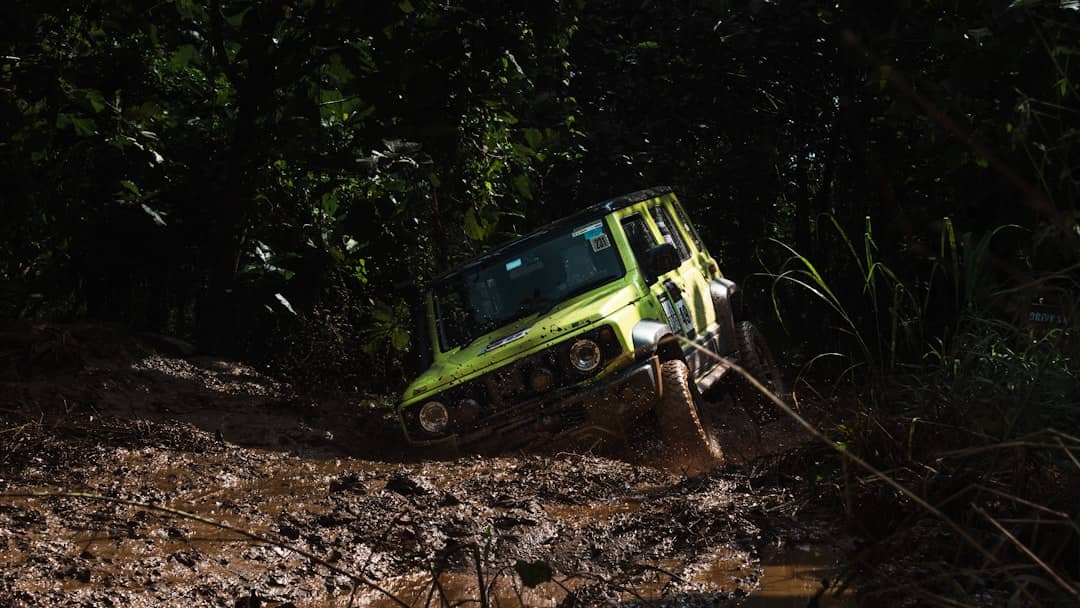
Which Side-by-Side Is Right for Mississippi Mud Parks?
The right machine for a Mississippi mud park is a full-size utility side-by-side with the highest ground clearance you can afford, cooling headroom for all-day low-speed running, and enough tire clearance to fit a larger mud tire without cutting fenders. Horsepower matters least of the four. A 100-horsepower machine sitting on the frame is stuck exactly as thoroughly as a 70-horsepower one.
That order surprises buyers who arrive shopping on engine size. It should not. Park riding is a traction and heat problem, and both are solved with clearance, tires, and airflow. The mud riding guide covers the specific model picks; this piece explains why the park itself dictates the specification.
Ready to get serious about one of these?
Nothing beats seeing your top picks on the floor, sitting in them, and talking real numbers before you decide.
Browse current inventory →What Makes Mud-Park Riding Different?
Mud-park riding is a low-speed, high-load, all-day duty cycle, which is close to the hardest thing you can ask of a side-by-side. Trail riding lets a machine move air through the radiator and the clutch housing. A mud pit does the opposite: the machine works at full load at walking pace, often in standing water, with a radiator packed in clay.
The parks themselves set the specification. Red Creek Off-Road in Perkinston covers roughly 500 acres with about 20 miles of trails alongside its mud holes, and Burden's Creek ATV Park runs about 400 acres of ponds, trails, and mud pits. That mix means a machine spends the day alternating between deep water, red clay, and enough trail to matter, which is a broader test than a single mud hole.
How Much Ground Clearance Do You Need?
Aim for the top of the mainstream utility class and treat published clearance as your floor. The 2026 Polaris Ranger XP 1000 lists 14 inches of ground clearance, the 2026 CFMoto UForce 1000 lists 11.4 inches, and the 2026 Can-Am Defender XT HD9 lists 11 inches. Those three inches sound trivial until they are the difference between crossing a rut and sitting on the frame in it.
Tires change the number, which is why they are the best first upgrade. A taller mud tire lifts the whole machine and adds bite, but it also raises effective gearing and increases the load on the drivetrain. The honest sequence is to buy clearance in the machine, then add a modest tire step, rather than to buy a low machine and try to correct it with rubber.
Ready to get serious about one of these?
Nothing beats seeing your top picks on the floor, sitting in them, and talking real numbers before you decide.
Browse current inventory →Do You Need a Snorkel and a Radiator Relocate?
It depends entirely on how deep you actually ride. Factory machines seal well enough for water crossings at or below the floorboards, which covers most park trails and shallow pits. Deep-water riding, where water reaches the seat, is where intake, clutch vent, and differential vent routing become the difference between a wet afternoon and a hydrolocked engine.
A radiator relocate solves a different problem: a front radiator packs with clay and stops moving air, which is exactly what causes the overheating that ends mud days. Riders who spend most of their time in deep pits do both. Riders who mostly run park trails with occasional holes generally need neither, and are better served spending that budget on tires and skid protection.
What Actually Breaks at a Mud Park?
The drive belt goes first, and heat is why. A CVT belt in a mud hole is slipping under enormous load with little airflow, which glazes the compound and starts shedding material. Eric Murray, an engineer at Carlisle, put the load in perspective in Dirt Wheels: "Picture accelerating 1600-plus pounds as hard as the fastest side-by-side can by pulling it with a rope. That is what is happening inside your transmission."
After belts come wheel bearings, seals, and radiators, all of which suffer from repeated water and grit exposure rather than from any single failure. Belt replacement runs roughly $200 to $400 with labor, which makes a spare belt one of the cheapest forms of insurance a park rider can carry. The belt life guide covers how to make one last, and the maintenance guide prices the rest of the year.
Ready to get serious about one of these?
Nothing beats seeing your top picks on the floor, sitting in them, and talking real numbers before you decide.
Browse current inventory →Should You Buy Stock or Build It?
Buy the clearance and buy the cooling; add the rest as you learn how you actually ride. Building clearance onto a machine that lacks it means lifts, larger tires, and re-gearing, which stack up in cost, stress the drivetrain, and can complicate warranty conversations. Buying a machine that already sits where you need it avoids all three problems.
There is also a resale argument. Tastefully accessorized machines with tires, protection, and a winch sell well in this region. Heavily modified machines with lifts and cut fenders sell to a narrower audience at a discount. The value machines are worth a look here: the budget mud guide covers what the lower price point does and does not cost you at a park.
What Does the Right Setup Cost?
A capable park machine starts at the mainstream utility entry point of $13,999 for a 2026 CFMoto UForce 1000, per CFMOTO USA, and runs into the low $20,000s for a premium full-size machine. Then budget for the setup: a real mud tire set, skid protection, and a winch, which together commonly run well into four figures.
Add consumables, because park riding burns them. A spare belt, more frequent oil and filter changes, and periodic bearing and seal work are the actual cost of riding mud regularly. The ownership cost guide shows how much faster that bill accumulates on a mud-driven machine than on a trail machine.
Ready to get serious about one of these?
Nothing beats seeing your top picks on the floor, sitting in them, and talking real numbers before you decide.
Browse current inventory →FAQ
What tire size is right for Mississippi mud parks?
Most riders get the best return from a moderate step up in a dedicated mud tire rather than the largest tire that will fit. Bigger tires add bite and clearance but raise effective gearing and drivetrain load, which shortens belt life. Match the tire to the machine's published clearance instead of trying to correct a low machine with rubber.
Can you run a sport side-by-side at a mud park?
You can, and plenty of people do, but sport machines are built low and geared for speed rather than for slow, loaded crawling. They generally publish less ground clearance and no meaningful cargo capacity. For a machine that spends most weekends in mud, the full-size utility class is the better platform.
Do you need a snorkel to ride Mississippi mud parks?
Only if you ride deep. Factory sealing handles water at or below the floorboards, which covers most park trails and shallow pits. Once water regularly reaches the seat, intake and vent routing become the difference between a wet ride and a hydrolocked engine, and that is when a snorkel kit earns its cost.
What maintenance does a machine need after a mud day?
Wash it before the clay dries, with attention to the radiator, the clutch intake, and behind the wheels. Check the airbox and the CVT housing for water, grease the fittings, and inspect the belt for glazing. Skipping the post-ride wash is the single most expensive habit in mud country, because packed clay holds moisture against bearings and seals.
Sources
- The best UTVs for mud riding
- The best budget UTVs for mudding
- Most reliable side-by-side for mud and hunting land
- 2026 RANGER XP 1000 specifications, Polaris
- 2026 UFORCE 1000, CFMOTO USA
- Red Creek Off-Road, Explore Stone County
- FIX IT: CVT belt tips and what breaks them (Eric Murray, Carlisle), Dirt Wheels Magazine
- UTV drive belt replacement, SuperATV Off-Road Atlas
- Hattiesburg Cycles