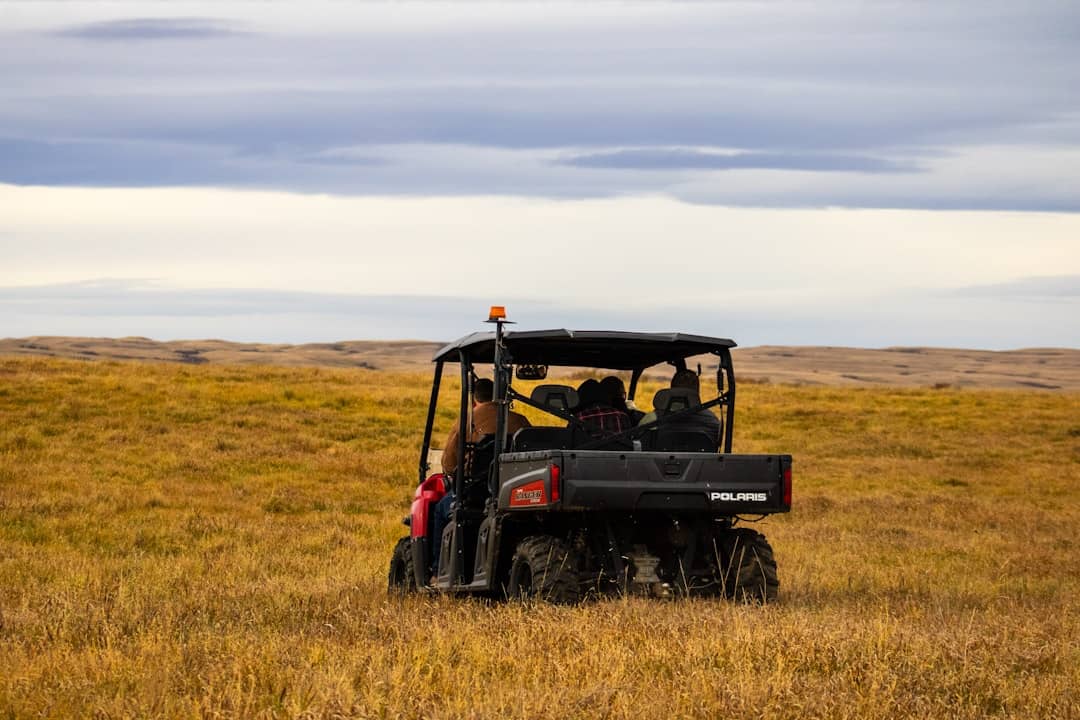
What Are the Three Side-by-Side Classes?
Buyers still deciding between a four-wheeler and a side-by-side should settle that first in the ATV vs UTV comparison; everything below assumes the side-by-side is the category.
Side-by-sides sort into three practical classes: utility, sport, and recreation. Utility machines are built around a cargo bed, a hitch, and low-end torque. Sport machines are built around suspension travel and power-to-weight, with little or no usable bed. Recreation and crossover models sit between the two, carrying some cargo while riding more comfortably than a work machine. Getting the class right is what turns an overwhelming lot into a three-machine shortlist.
| Utility | Sport | Recreation / crossover | |
|---|---|---|---|
| Built for | Work, hauling, hunting, mud | Speed, jumps, dunes, desert | Trail comfort with some cargo |
| Cargo bed | Yes, typically 1,000 lb rated | Minimal or none | Small to mid-size |
| Towing | Commonly 2,000 to 2,500 lb | Rarely rated for real towing | Light to moderate |
| Suspension travel | Moderate | Long | Moderate to long |
| Typical 2026 price | About $14,000 to $26,000 | About $16,000 to $30,000+ | About $14,000 to $22,000 |
| Gulf South fit | Strongest | Weakest | Situational |
Published specifications make the split concrete. The 2026 Polaris Ranger XP 1000, a utility machine, is rated at 2,500 pounds of towing and 1,500 pounds of payload with 14 inches of ground clearance, per Polaris. The 2026 CFMoto UForce 1000, also utility, carries a 1,000-pound rear cargo rating and a 2,500-pound tow rating at a $13,999 MSRP, per CFMOTO USA. Sport machines in the same price territory publish no comparable cargo numbers, because that is not what they are for.
Ready to get serious about one of these?
Nothing beats seeing your top picks on the floor, sitting in them, and talking real numbers before you decide.
Browse current inventory →What Is a Utility Side-by-Side Built to Do?
A utility side-by-side is built to carry weight, pull weight, and keep working at low speed. The defining hardware is a dumping cargo bed, a receiver hitch, a low-range transmission, and a locking front differential. Engines in this class favor low-end torque over peak horsepower, because moving a loaded machine through mud at walking pace is a torque problem, not a horsepower one.
This is the class that fits how the Gulf South actually rides. Hauling corn to a feeder, dragging a food-plot implement, pulling a stuck trailer, and crossing a wet bottom are all utility-class jobs. It is also the class where cab options matter, since a machine used year-round in Mississippi heat and winter rain benefits from a roof and a windshield more than from another 20 horsepower. The best UTV for the money guide works through where value sits inside this class.
What Makes a Sport Side-by-Side Different?
Sport machines are engineered around suspension travel and power-to-weight, and they give up cargo capability to get there. Long-travel suspension, high-revving engines, and aggressive gearing make them fast over rough ground and thrilling in open terrain. They are lighter on their feet than a utility machine and considerably less useful on a Monday.
The tradeoff shows up quickly in Gulf South conditions. Sport machines generally sit lower, publish smaller cargo ratings, and are geared for speed rather than for slow, loaded, low-range work. A sport machine can absolutely run a mud park, but it will not haul a deer out, pull an implement, or carry feed. Buyers drawn to the sport class who also have land to work usually end up owning a utility machine and being glad they did.
Ready to get serious about one of these?
Nothing beats seeing your top picks on the floor, sitting in them, and talking real numbers before you decide.
Browse current inventory →What Is a Recreation or Crossover Machine?
Recreation and crossover models are the middle class: more comfortable and more trail-focused than a work machine, more practical than a pure sport machine. They typically carry a modest bed, moderate towing, and suspension tuned for riding rather than for hauling. In much of the country this is the volume class.
In the Pine Belt it is more situational. A buyer whose weekends are trail rides with a cooler is well served here. A buyer who hunts, works property, or rides mud regularly will find the crossover short on bed, clearance, and towing exactly when those matter most. The class is a good answer to a question most Gulf South buyers are not actually asking.
Which Class Wins for Mud, Hunting, and Property Work?
Utility wins all three, and it is not close. Mud rewards ground clearance and low-range torque, hunting rewards a bed and quiet low-speed operation, and property work rewards towing and payload. Those are the three things the utility class is designed around, which is why the region's shortlist keeps returning to full-size utility machines regardless of brand.
The regional verdict is a terrain argument rather than a taste argument. Ground clearance figures illustrate it: the 2026 Ranger XP 1000 lists 14 inches, the 2026 CFMoto UForce 1000 lists 11.4 inches, and the 2026 Can-Am Defender XT HD9 lists 11 inches, while sport machines are built low for stability at speed. For the specific machine picks inside the class, the mud riding guide and the hunting guide go model by model, and the farm and property work guide covers the towing and payload end of the utility case.
Ready to get serious about one of these?
Nothing beats seeing your top picks on the floor, sitting in them, and talking real numbers before you decide.
Browse current inventory →Can One Machine Cover All Three Jobs?
A full-size utility machine covers work, hunting, and mud genuinely well, and covers sport riding only adequately. That is the honest answer. A Ranger, Defender, or UForce will run a mud park all day, get to a stand quietly, and pull a trailer on Monday. Buyers weighing those work-first machines against the traditional farm names can compare them in the Ranger vs Gator vs Mule breakdown. It will not match a purpose-built sport machine over whoops at speed, and it was never meant to.
The reverse substitution fails much harder. A sport machine cannot be made into a work machine with accessories, because bed, hitch, gearing, and clearance are structural. Buyers who genuinely want both usually buy the utility machine first and add a sport machine later, not the other way around.
What Does Each Class Cost?
Utility machines span the widest price range, from about $14,000 for a value model to the mid-$20,000s for a premium cab-equipped trim. The 2026 CFMoto UForce 1000 anchors the low end at $13,999, per CFMOTO USA, and mainstream premium utility trims run into the low $20,000s. Sport machines start in a similar place and climb faster, since suspension and turbo hardware are expensive.
Whatever the class, the sticker is not the number. Freight, dealer setup, documentation, and sales tax add roughly 10 to 15 percent, and Polaris alone lists a $1,295 destination charge plus a $500 logistics surcharge on some models. Prices across the segment have stayed elevated: Lenny Sims, Vice President at J.D. Power Specialty Valuation Services, has noted that "buyers are paying historically high levels for vehicles that come on the market," which is why picking the right class before shopping saves more money than negotiating does. The full cost guide turns class ranges into out-the-door math.
Ready to get serious about one of these?
Nothing beats seeing your top picks on the floor, sitting in them, and talking real numbers before you decide.
Browse current inventory →FAQ
Is a sport side-by-side bad in mud?
Not bad, but poorly suited. Sport machines are geared and sprung for speed over rough ground rather than for slow, loaded work, and they generally sit lower than utility machines. They can run a mud park, but they will not tow, haul, or crawl as well, and they lack the bed most Gulf South buyers end up needing.
Can a utility machine still be fun to ride?
Yes. Modern full-size utility machines make 70 to 100-plus horsepower and will run trails and mud parks all day. What they will not do is match a purpose-built sport machine over whoops at speed. For most buyers who ride mud, hunt, and work land, that is a trade worth making.
What class is a Ranger, a Defender, or a RZR?
The Polaris Ranger and the Can-Am Defender are utility machines, built around cargo beds, hitches, and low-range gearing. The Polaris RZR is a sport machine, built around suspension travel and power-to-weight. The CFMoto UForce is utility and the ZForce is sport, following the same split.
Which class holds its value best?
Full-size utility machines generally have the deepest and steadiest used market in this region, because they serve work, hunting, and recreation buyers at once. Sport machines depend more on trim and condition, and hard-used examples are discounted heavily. Used machines of any class commonly sell 25 to 40 percent below new.
Sources
- How to choose your first side-by-side
- The best UTVs for the money
- How much does a side-by-side cost
- 2026 RANGER XP 1000 specifications, Polaris
- 2026 UFORCE 1000, CFMOTO USA
- 2026 Can-Am Defender XT HD9 specifications, ATV.com
- Powersports Hits Historical High Point, Says J.D. Power Report (Lenny Sims), Motorcycle & Powersports News
- Hattiesburg Cycles