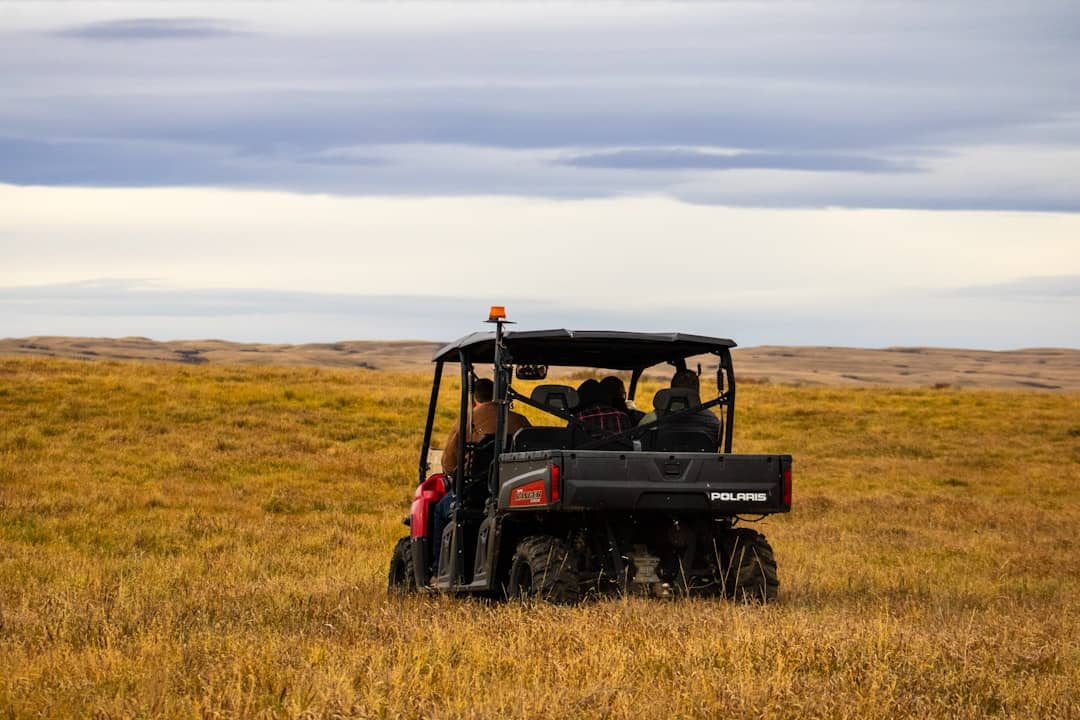
Ranger vs Gator vs Mule: What Is Each Machine Actually For?
Each of these three is built around a different core job, which is why buyers who pick on price alone often end up with the wrong one. The John Deere Gator is engineered as a farm implement first, with the highest towing rating of the group. The Kawasaki Mule is a slow-and-simple workhorse built to run for decades. The Polaris Ranger is the do-more machine that works hard but also plays.
| Machine | MSRP (July 2026) | Engine | Towing | Cargo bed | Standard warranty |
|---|---|---|---|---|---|
| Polaris Ranger XP 1000 | $21,499 | 82 hp ProStar | 2,500 lb | Full-size | 12 mo |
| John Deere Gator XUV835M | ~$18,000 to $20,000 (varies) | 54 hp EFI | 4,000 lb | 1,000 lb box | John Deere dealer coverage |
| Kawasaki Mule PRO-FXR 1000 | $15,999 | 999cc | 2,000 lb | 1,000 lb bed | 3-year Kawasaki STRONG |
The Gator XUV835M lists a 4,000 pound towing capacity and a 1,000 pound cargo box with a 54 horsepower EFI engine, per John Deere. The Mule PRO-FXR 1000 pairs a 999cc engine with a 2,000 pound towing rating and, notably, a three-year limited warranty, per Kawasaki. The Ranger XP 1000 splits the difference on work numbers but adds the horsepower, suspension, and speed the other two leave out.
Ready to get serious about one of these?
Nothing beats seeing your top picks on the floor, sitting in them, and talking real numbers before you decide.
Browse current inventory →Which One Works Hardest on a Farm?
For pure farm duty, the Gator makes the strongest case, led by its 4,000 pound towing rating, per John Deere, which is the highest of the three and well above the Ranger's 2,500 pounds. Add the John Deere implement and attachment ecosystem, the dealer network that already services a farm's tractors, and a machine engineered around hauling and towing rather than recreation, and the Gator earns its keep on a working operation.
The Mule counters on simplicity and price. At $15,999 it is the cheapest of the three, and its reputation is built on understressed, low-drama reliability rather than peak numbers. The Ranger's farm case is versatility: it tows and hauls plenty for most properties while also doing jobs the Gator and Mule are not built for, which matters on the many Gulf South tracts that are equal parts farm, hunting lease, and weekend riding ground. The farm and property work guide widens the field beyond these three and works through which towing and payload numbers a small operation actually needs.
Why Does the Mule Have a Reputation for Lasting Forever?
The Mule's durability reputation comes from deliberate engineering choices: understressed powertrains, work-governed speeds, and a build focused on longevity over performance. Kawasaki assembles the Mule PRO series in Lincoln, Nebraska, and builds the PRO-FXR around a Shinari-tuned frame designed to flex under load without cracking, per Total Landscape Care. The three-year limited warranty, the longest in this comparison, signals how Kawasaki expects the machine to hold up.
"Our products really stand the test of time and have to hold up," said Kevin Mann, product manager for Kawasaki's four-wheel products, describing the Mule's design priorities to Total Landscape Care. The honest tradeoff is that this durability comes with less speed, less suspension travel, and a plainer ride than the Ranger. A buyer who wants a machine that quietly works for twenty years and never asks for much gets exactly that; a buyer who also wants to ride it for fun will find the Mule deliberately tame.
Ready to get serious about one of these?
Nothing beats seeing your top picks on the floor, sitting in them, and talking real numbers before you decide.
Browse current inventory →Which One Can Also Hunt, Trail Ride, and Handle Mud?
This is where the Ranger pulls away, because it is the only one of the three built for recreation as well as work. It carries the most horsepower at 82, the most suspension travel, and 14 inches of ground clearance, per Polaris, plus the deepest aftermarket for mud tires, snorkels, hunting racks, and lighting. The Gator and Mule are engineered as work vehicles and are speed-governed and lightly sprung by comparison, which is exactly right for a jobsite and limiting on a mud trail or a hunting lease with rough two-tracks.
For the many Gulf South buyers whose one machine has to cross mud on Saturday and slip to a deer stand on Sunday, that versatility is decisive. The best side-by-side for hunting guide and the most reliable side-by-side for mud and hunting land guide cover how the Ranger platform sets up for both jobs, which neither the Gator nor the Mule is designed to do.
What Do They Cost to Buy and Own?
On sticker price the Mule leads at $15,999, the Gator sits in the high teens to around $20,000 depending on configuration and dealer, and the Ranger XP 1000 tops the group at $21,499. Warranty flips the order: the Mule's three-year term is the longest, the Ranger carries a 12-month standard warranty, per Polaris, and Gator coverage runs through the John Deere dealer network. For a full Ranger price map by trim, see how much a Polaris Ranger costs.
The deeper ownership question is where you get it serviced. Gators live at implement and John Deere dealers, Mules at general powersports stores, and the Ranger at the widest powersports service network of the three. For a cross-shopper the right move is to buy where the parts and service actually are, which the Ranger vs Defender comparison also weighs for the powersports work-UTV buyer.
Ready to get serious about one of these?
Nothing beats seeing your top picks on the floor, sitting in them, and talking real numbers before you decide.
Browse current inventory →So Which Should You Buy?
Buy the Gator if the machine is a pure farm tool that mostly tows and hauls; its 4,000 pound rating and implement ecosystem are hard to beat for that job. Buy the Mule if you want the simplest, most durable, lowest-cost workhorse and do not care about speed or suspension; the three-year warranty backs the reputation. Buy the Ranger if your one machine also has to hunt, ride mud, and haul the family, which describes most Gulf South land owners, making it the best all-around value of the three.
FAQ
Is a Gator or a Ranger better for farm work?
For pure farm work the Gator makes the stronger case, led by its 4,000 pound towing rating (versus 2,500 for the Ranger) and the John Deere implement ecosystem. The Ranger wins when the same machine also needs to hunt, ride mud, or haul the family, which the Gator is not built to do.
Why do people say the Kawasaki Mule lasts forever?
The Mule is engineered for longevity over performance, with understressed powertrains, work-governed speeds, and a frame built to flex under load. Kawasaki backs it with a three-year limited warranty, the longest in this group. The tradeoff is a slower, plainer machine that is not meant for recreation.
Which of the three tows the most?
The John Deere Gator XUV835M, at 4,000 pounds, per John Deere. The Ranger XP 1000 and Mule PRO-FXR 1000 are rated at 2,500 and 2,000 pounds respectively, which still covers most property and lease work.
Which is best if you also hunt or ride trails?
The Polaris Ranger, by a clear margin. It carries the most horsepower and suspension of the three and has the deepest aftermarket for mud, hunting, and trail setups. The Gator and Mule are work-first machines and are speed-governed and lightly sprung for recreation.
Ready to get serious about one of these?
Nothing beats seeing your top picks on the floor, sitting in them, and talking real numbers before you decide.
Browse current inventory →