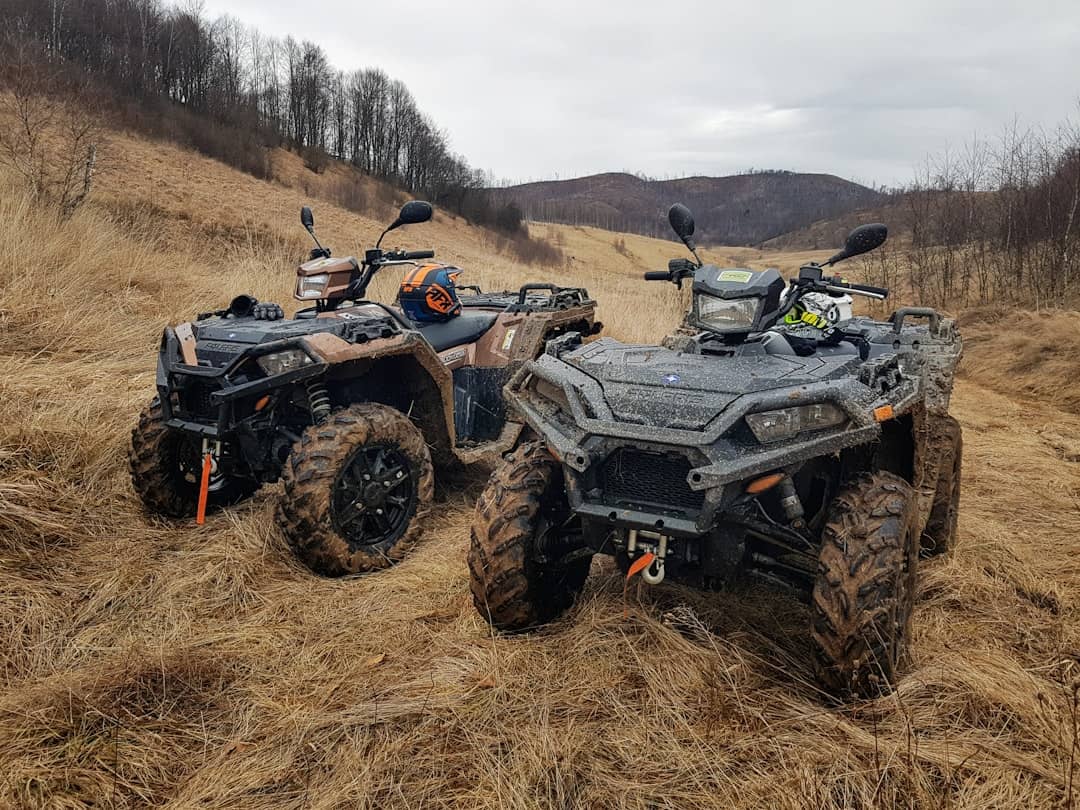
What Actually Separates Polaris and Can-Am?
Polaris and Can-Am build a machine for nearly every use case, so the real difference is not a single spec but the shape of each brand. Polaris leans on lineup breadth and dealer coverage; Can-Am leans on cab refinement and Rotax torque. Both run belt-driven CVT transmissions, both cover a huge price range, and both are core lines at serious multi-line dealers.
Price is the cleanest starting point. As of July 2026, a Polaris Ranger XP 1000 lists at $21,499 with an 82 horsepower ProStar engine and a 2,500 pound towing rating, per Polaris. A Can-Am Defender HD9 lists at $16,899 with a 65 horsepower Rotax and the same 2,500 pound towing rating, per Can-Am. The Defender undercuts the comparable full-size Ranger by roughly $4,600 at the base end, though the two brands leapfrog each other as you climb the trims.
| Brand-level trait | Polaris | Can-Am |
|---|---|---|
| Flagship work trim (base MSRP, July 2026) | Ranger XP 1000, $21,499 | Defender HD9, $16,899 |
| Flagship work engine | 82 hp ProStar | 65 hp Rotax |
| Standard warranty | 12 months | 12 months BRP limited |
| Lineup breadth | Ranger, RZR, General, Sportsman, XPEDITION | Defender, Maverick, Commander, Outlander |
| Reputation strength | Widest dealer network, resale | Cab comfort, torque, sport pedigree |
The takeaway is that "which brand" is really "which brand fits your use case, your dealer situation, and your resale plans." The rest of this comparison sorts those out.
Ready to get serious about one of these?
Nothing beats seeing your top picks on the floor, sitting in them, and talking real numbers before you decide.
Browse current inventory →Which Brand Is More Reliable?
Reliability differences between Polaris and Can-Am are driven more by model and maintenance than by badge. Both brands build their utility and sport machines around a CVT drive belt, which is the single most common wear item on either brand, and both have model years and trims that owners praise and others they gripe about. A brand-level "more reliable" verdict oversells a real answer that lives at the model level.
The honest engineering read is that a belt-driven CVT is a consumable system on both sides. Heat, mud, and low-speed load wear belts faster regardless of the badge on the hood, which is why belt care and a dealer that stocks belts matter more than brand folklore. For the deeper three-way on durability, including where CFMoto now fits, the Polaris vs Can-Am vs CFMoto durability comparison breaks it down machine by machine.
Which Is Better for Mud, Hunting, and Farm Work?
The brand verdict flips by use case, which is exactly why a single winner is the wrong question. Broken down by the three jobs Gulf South buyers actually ask of these machines, each brand has a genuine home:
- Mud: Both brands build capable mud trims. Can-Am's long-travel Maverick platforms reward speed through rutted holes, while Polaris covers the ground with Ranger clearance and RZR travel. The deciding factors are clearance, true four-wheel-drive engagement, and tires, covered in the best UTV for mud riding guide.
- Hunting: The quiet, tame utility trims win the lease, and both the Ranger and Defender field hunt-ready configurations. The best side-by-side for hunting guide ranks them for Southern woods.
- Farm and property: The Defender's torque delivery and lower entry price make it a value-forward work rig; the Ranger answers with suspension and lineup depth. Buyers who also cross-shop a Gator or Mule should read the Ranger vs Gator vs Mule comparison.
Can-Am has built its marketing case on that engine advantage. Christian St-Onge, Director, Global Product Strategy, Can-Am Off-Road Vehicles, described the brand's Rotax lineup in an August 2021 announcement of the 2022 model year as "class leading in power and the best option to accomplish the task at hand, whether that's work or play." Polaris counters from the other direction. Chris Judson, Vice President and General Manager of Off-Road Utility at Polaris, said the 2025 full-size Ranger lineup was built to "deliver more capability, durability, and comfort as the number one selling off-road brand," leaning on the broadest set of trims and the largest service footprint in the segment.
Ready to get serious about one of these?
Nothing beats seeing your top picks on the floor, sitting in them, and talking real numbers before you decide.
Browse current inventory →Which Holds Its Value Better?
Resale on both brands is strong relative to off-brand machines, and the gap between them is narrow enough that condition and maintenance history swamp the badge. A well-kept Ranger and a well-kept Defender both hold value better than a neglected example of either, and both hold value better than an unknown-brand machine with a thin dealer network behind it.
What actually moves resale is dealer support, parts availability, and service records, which is where the widest network helps Polaris and where Can-Am's established resale on popular trims keeps pace. A buyer optimizing for trade-in value should keep service receipts, replace the belt on schedule, and buy a model with a deep local parts pipeline, on either brand.
Which Costs More to Own?
Ownership cost is close between the two, with the belt and scheduled service driving most of the recurring bill on both brands. Both carry a 12-month standard factory warranty, and both sell extended-service coverage on top of it, including Can-Am's B.E.S.T. plans in 12, 24, or 36 month blocks.
Beyond the warranty, the numbers that matter are belt replacement intervals, oil and filter service, and tire wear, none of which favor one brand decisively. A realistic annual figure and the belt-life reality are itemized in the side-by-side maintenance cost guide. The practical point is that neither brand is cheap to run hard in Gulf heat and mud, and both stay affordable with a service department that knows them.
Ready to get serious about one of these?
Nothing beats seeing your top picks on the floor, sitting in them, and talking real numbers before you decide.
Browse current inventory →So Which Brand Should You Buy?
Buy the brand that fits your use case and your dealer, not the logo. Choose Polaris for lineup breadth, the widest service network, and resale confidence; choose Can-Am for cab comfort, torque delivery, and a lower entry price on the work trims. For most Gulf South buyers the decision comes down to a single afternoon of seat time, because the differences that matter (ride feel, cab noise, ergonomics) are the ones a spec sheet cannot show.
FAQ
Is Polaris or Can-Am more reliable?
Reliability tracks the specific model and its maintenance more than the brand. Both Polaris and Can-Am build utility and sport machines around a belt-driven CVT, which is the main wear item on either brand, so a well-maintained example of either outlasts a neglected one. Buying from a dealer that stocks belts and parts is the bigger reliability lever than the badge.
Which is cheaper, Polaris or Can-Am?
At the base full-size work trim, Can-Am is cheaper: the Defender HD9 lists at $16,899 versus $21,499 for the Ranger XP 1000 as of July 2026. The brands trade the lead as you move up trims, so the honest answer depends on the exact configuration you are comparing.
Is Can-Am worth the extra money over Polaris?
On the work trims Can-Am is often the lower-priced option, not the premium one, so the question usually runs the other way. Where either brand commands a premium, it buys cab refinement, suspension tuning, or lineup features, and whether that is worth it depends on how you ride. A back-to-back test drive is the fastest way to judge it.
Which brand is better for mud and hunting?
Both build capable mud and hunting trims, so the winner is model-specific. For mud, prioritize clearance, four-wheel-drive engagement, and tires; for hunting, prioritize quiet operation and clearance. The use-case guides linked above rank specific machines for each job.
Ready to get serious about one of these?
Nothing beats seeing your top picks on the floor, sitting in them, and talking real numbers before you decide.
Browse current inventory →Sources
- Polaris vs Can-Am vs CFMoto durability comparison
- Polaris Ranger vs Can-Am Defender
- Best UTV for mud riding
- Polaris Ranger XP 1000, Polaris
- Can-Am Defender, BRP
- BRP Limited Warranty, Can-Am
- Can-Am Unveils 2022 Lineup, PR Newswire
- Polaris Elevates the Best-Selling Side-by-Side With the 2025 Full-Size Ranger Lineup, Polaris
- Hattiesburg Cycles