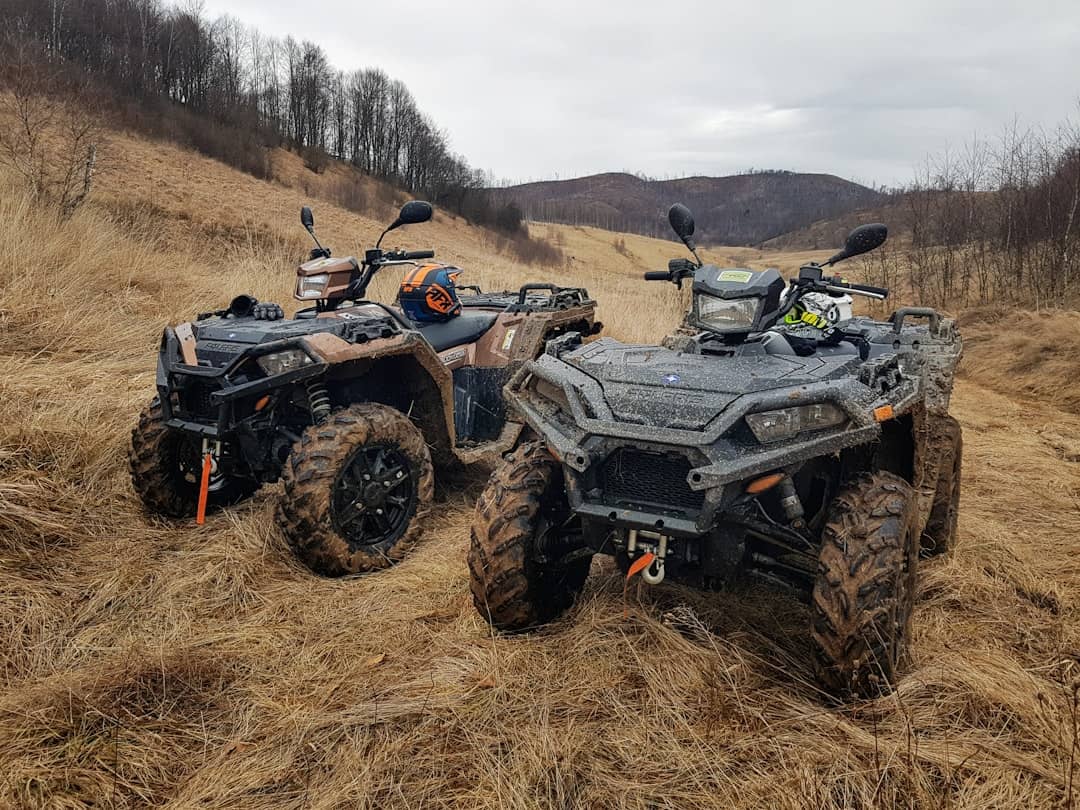
CFMoto vs Polaris: What Is the Real Difference?
The difference is value versus establishment. CFMoto undercuts Polaris by thousands and includes equipment Polaris charges extra for; Polaris answers with the deepest dealer network, the strongest resale, and the most refined ride. As of July 2026, a CFMoto UForce 1000 lists at $13,999 with 71 horsepower and a standard winch and roof, per CFMoto, while a Polaris Ranger XP 1000 lists at $21,499 with 82 horsepower, per Polaris. That is roughly a $7,500 gap on the utility flagship.
| Class matchup | CFMoto | Polaris |
|---|---|---|
| Utility flagship (MSRP, July 2026) | UForce 1000, $13,999 | Ranger XP 1000, $21,499 |
| Utility value trim | UForce 1000 (winch + roof standard) | Ranger 1000, $14,299 |
| Sport machine | ZForce 950 Sport, $15,999 | RZR XP 1000, $19,999 |
| Standard warranty | 12 months | 12 months |
| Dealer network | 700-plus US locations, No. 3 US off-road provider | Largest powersports network |
Both brands make a machine for every use case, so the honest comparison is class by class: utility against utility, sport against sport. The rest of this breaks down where the price gap is real value and where Polaris earns its premium back.
Ready to get serious about one of these?
Nothing beats seeing your top picks on the floor, sitting in them, and talking real numbers before you decide.
Browse current inventory →UForce vs Ranger: Which Is the Better Work Side-by-Side?
For work, the UForce delivers more machine per dollar while the Ranger delivers a more refined, better-supported one. The UForce 1000 makes 71 horsepower, tows 2,500 pounds, and ships with a 3,500 pound winch and a roof standard, per CFMoto, at $13,999. The Ranger XP 1000 makes 82 horsepower with 14 inches of ground clearance and the widest service network behind it, at $21,499. Even the value Ranger 1000, at $14,299, arrives without the winch and roof the UForce includes.
Dirt Wheels Magazine tested the UForce 1000 against the class over several weeks of work and concluded that its minor rough edges were easy to accept given the thousands in savings versus a comparably equipped Ranger. The Ranger's premium reflects a different pitch: Chris Judson, Vice President and General Manager of Off-Road Utility at Polaris, described the current full-size Ranger lineup as built to "deliver more capability, durability, and comfort as the number one selling off-road brand." That is the honest work verdict in two sentences: the UForce is the value play, and the Ranger's premium buys refinement, resale, and network depth. A farm or hunting-land buyer who was going to add a winch and roof anyway starts ahead with the UForce.
ZForce vs RZR: Which Sport Machine Is the Better Value?
On the sport side the gap narrows in performance but Polaris keeps a refinement edge. The CFMoto ZForce 950 Sport lists at $15,999 with 83 horsepower, per CFMoto, while the Polaris RZR XP 1000 lists at $19,999 with 114 horsepower, per Polaris. The RZR brings more power and Polaris's long-developed sport suspension, which hard-charging riders feel at speed; the ZForce brings a genuinely capable sport platform for about $4,000 less.
The honest read is that the RZR still leads for aggressive, high-speed riding where factory suspension tuning matters most, while the ZForce is the value choice for a rider who wants sport-style capability without the flagship price. For most Gulf South riders, whose sport time is trails and mud rather than desert dunes, the ZForce closes enough of the gap to make the price difference the deciding factor.
Ready to get serious about one of these?
Nothing beats seeing your top picks on the floor, sitting in them, and talking real numbers before you decide.
Browse current inventory →Which Holds Its Value and Is Cheaper to Own?
Polaris holds resale better today; CFMoto is cheaper to buy and has closed much of the ownership-risk gap. Polaris's long track record and huge installed base support strong used values, which is a real advantage for a buyer who trades often. CFMoto's lower entry price means less money at risk up front, and its US network passing 700 dealers, per Powersports Business, has steadily improved parts access and resale confidence.
On running costs the two are close, since both use belt-driven CVTs and similar service intervals; the maintenance cost guide itemizes the recurring bill. Whether CFMoto has truly closed the reliability gap, the question that decides long-term value, is the subject of the is CFMoto reliable guide, and the three-way Polaris vs Can-Am vs CFMoto durability comparison puts it alongside the legacy brands.
Which Has Better Dealer Support in the Gulf South?
Dealer support often decides this comparison, and it is less lopsided than it used to be. Polaris has the larger overall network, but CFMoto now reaches more than 700 US dealers and ranks as the third-largest off-road and motorcycle provider in the country, per Powersports Business. What matters for an individual buyer is not the national count but whether a strong dealer near them carries and services the brand, since parts access and warranty work are the real reliability variables.
That is why a multi-line dealer that carries both changes the calculation: the buyer is not forced to choose the brand by whichever dealer happens to be closest. Buying either brand from a large, established dealer with a stocked parts counter and a real service department de-risks the CFMoto value play and maximizes the Polaris network advantage at the same time.
Ready to get serious about one of these?
Nothing beats seeing your top picks on the floor, sitting in them, and talking real numbers before you decide.
Browse current inventory →So Which Should You Buy?
Buy CFMoto if you optimize price and standard equipment and want the most machine per dollar; the UForce and ZForce deliver that with a real network now behind them. Buy Polaris if you optimize resale, suspension refinement, and the deepest service footprint, and are willing to pay for them. For most Gulf South buyers the decision comes down to riding both classes back to back and deciding whether the Polaris premium is worth it for how they actually ride. Buyers cross-shopping the value UForce against the other premium work machine should also read the CFMoto UForce vs Can-Am Defender comparison.
FAQ
Is CFMoto as good as Polaris?
On capability and standard equipment the CFMoto UForce and ZForce are genuinely competitive and cost thousands less. Polaris still leads on suspension refinement, resale value, and network depth. For value CFMoto wins; for long-term resale and the most proven dealer support Polaris keeps the edge. The right answer depends on how you weigh price against those advantages.
Is the CFMoto UForce as good as a Polaris Ranger for work?
For most work it is competitive: 71 horsepower, a 2,500 pound towing rating, and a standard winch and roof at $13,999 versus $21,499 for the Ranger XP 1000. The Ranger answers with more horsepower, more suspension, and a deeper service network. A buyer who values price and standard kit leans UForce; one who values refinement and resale leans Ranger.
Does CFMoto hold its value like Polaris?
Not quite yet. Polaris has the longer resale track record and larger installed base, which supports strong used values. CFMoto resale has improved sharply as its dealer network passed 700 locations, and its lower entry price means less money at risk up front, but Polaris still holds the more proven used-market history.
Which has better dealer support and parts?
Polaris has the larger overall network, but CFMoto now ranks third in the US for off-road and motorcycle sales with 700-plus dealers, so the gap is smaller than its reputation suggests. For any single buyer, the deciding factor is whether a strong, well-stocked dealer near them carries the brand, which is why buying either from a large multi-line dealer matters.
Ready to get serious about one of these?
Nothing beats seeing your top picks on the floor, sitting in them, and talking real numbers before you decide.
Browse current inventory →Sources
- Is CFMoto reliable
- Polaris vs Can-Am vs CFMoto durability comparison
- Best UTV for the money
- CFMOTO UForce 1000, CFMOTO USA
- Polaris Ranger XP 1000, Polaris
- CFMoto Reveals 2026 Model Lineup With Expanded Distribution, Powersports Business
- CFMOTO UForce 1000 UTV Test, Dirt Wheels Magazine
- Polaris Elevates the Best-Selling Side-by-Side With the 2025 Full-Size Ranger Lineup, Polaris
- Hattiesburg Cycles